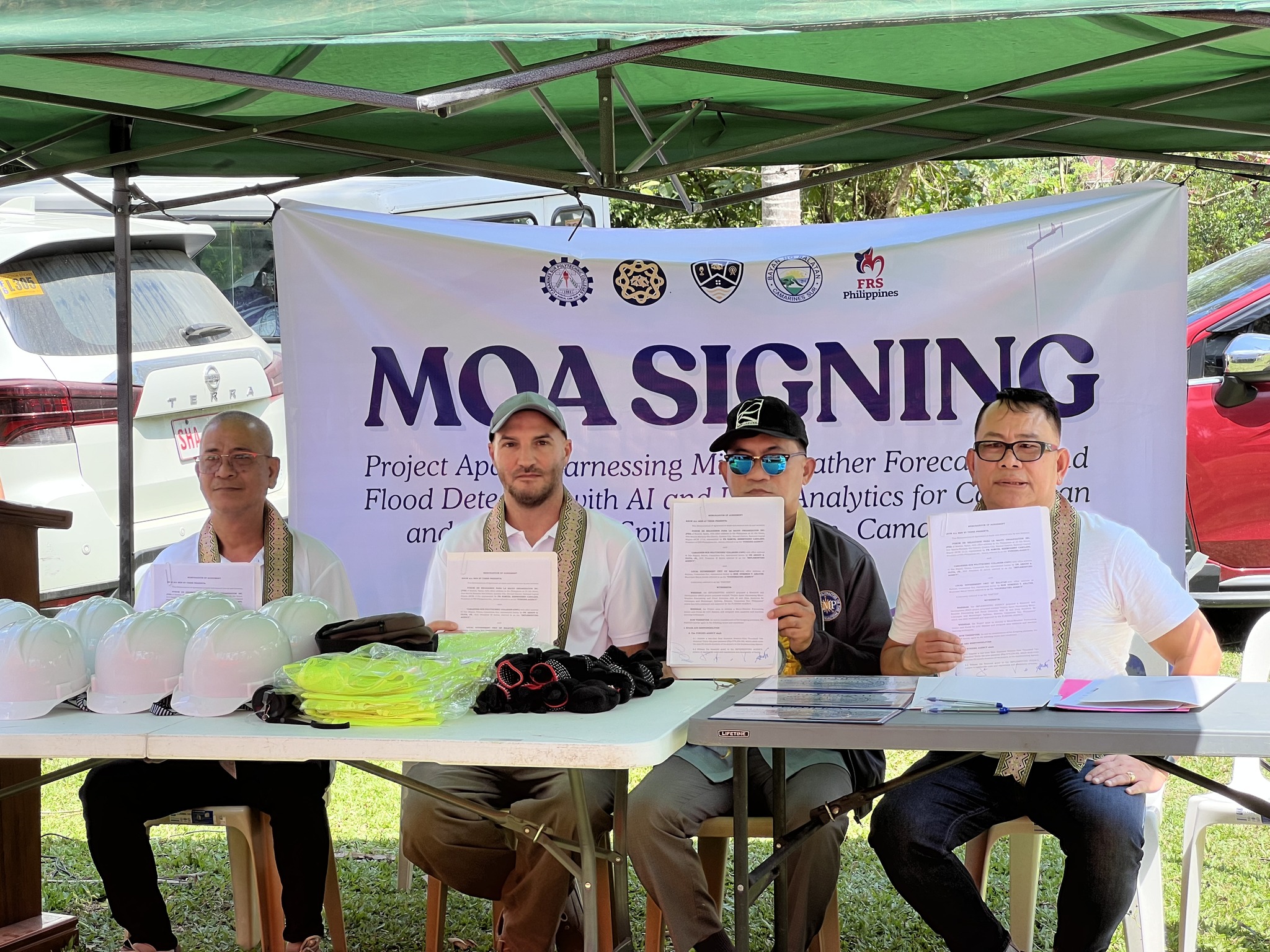



The AI Research Center for Community Development (AIRCoDe) of Camarines Sur Polytechnic Colleges (CSPC) formally joins the Bicol Riser Consortium following the successful Memorandum of Agreement (MOA) signing held on February 5, 2026, during the Budget Forum at Vela Hotel in Legazpi City. The event gathered consortium member-institutions to align priority programs, budget allocations, and implementation strategies for Fiscal Year 2026.
As part of CSPC’s commitment to advancing science and technology solutions for regional development, AIRCoDe will implement the research project titled “Micro-Weather Forecasting and Flood Detection with AI and Data Analytics,”with an approved ₱10 million budget for FY 2026. The study aims to enhance disaster preparedness and climate resilience in vulnerable communities across the Bicol Region.
The project focuses on developing localized, high-resolution micro-weather forecasting models capable of predicting rainfall intensity, temperature changes, humidity levels, and other atmospheric variations at the barangay level. By integrating real-time environmental sensor data, historical climate datasets, and machine learning algorithms, the system is designed to generate timely and accurate forecasts tailored to specific communities.
In addition to forecasting, the study incorporates AI-driven flood detection mechanisms that analyze rainfall patterns and water level data to identify potential flood risks. Through advanced data analytics, the system will provide early warning alerts to support local government units (LGUs), disaster risk reduction and management offices, and community stakeholders in making proactive and evidence-based decisions.
AIRCoDe’s participation in the Bicol Riser Consortium underscores CSPC’s dedication to community-centered research and innovation. By leveraging artificial intelligence and data analytics, the initiative aims to translate academic research into practical, scalable technologies that directly address climate-related challenges in the region.
Through this collaboration, AIRCoDe contributes to strengthening regional research networks while advancing sustainable, technology-driven solutions that promote safer and more resilient communities in Bicol.